The Old Tattoo Masters Who Practice Non Commercial Sak Yant (🇺🇸/🇹🇭)
The Old Tattoo Masters Who Practice Non Commercial Sak Yant
Sacred Traditions Tourists Rarely Witness
Thailand is famous worldwide for sak yant tattoos. Images of celebrities getting intricate designs from monks or ajarns appear everywhere online. Tourists travel to temples hoping to receive a spiritual blessing tattoo. Studios in Bangkok and Chiang Mai offer sak yant in hygienic and modern ways. But behind this global trend, there exists a hidden world that very few outsiders ever see. This world belongs to the old sak yant masters who continue to practice the art in a non commercial way. Their work is quiet, sacred and deeply intertwined with traditions that have existed for centuries.
Sak yant is more than body art. For true masters, it is a spiritual contract between a teacher and a student. It is a form of protection, guidance and transformation. And for the old ajarns who still follow the ancient ways, sak yant is not something you simply pay for. It is something you earn.
The Meaning Behind Non Commercial Sak Yant
The old masters believe sak yant is a sacred blessing. Money cannot purchase spiritual authority. A tattoo from a real ajarn is not a product, but a ritual. There are masters who refuse to accept payment in the form of a price. Instead they only accept offerings such as flowers, incense, betel nut, rice whisky or small symbolic donations. These offerings are not about value, but gratitude.
To receive a sak yant from one of these masters, you must approach with sincerity. Some people are turned away if their intentions feel unclear. The ajarn may ask questions about your life, your goals, your emotional state or any difficulties you are facing. Only after understanding the person will the master choose a design. Many old masters do not allow the student to choose at all. They believe the yant chooses the person, not the other way around.
The Hidden Locations Where Tradition Survives
Most of these masters work quietly in rural homes, small forest monasteries or local temples far from tourist areas. There are places in Isaan where old ajarns still perform sak yant in wooden houses lit with oil lamps. There are remote temples in Uthai Thani, Nakhon Pathom, Suphanburi and Chiang Rai where monks tattoo only local villagers who seek protection for farming, travel, love or spiritual strength.
These places are not advertised. There is no commercial studio or booking website. If you want to meet such a master, you are usually introduced by someone who already knows them. Trust and connection matter more than money. Many masters are elderly, some past seventy or eighty years old. They tattoo fewer people each year, and their knowledge disappears slowly as they age.
The Ritual and the Atmosphere
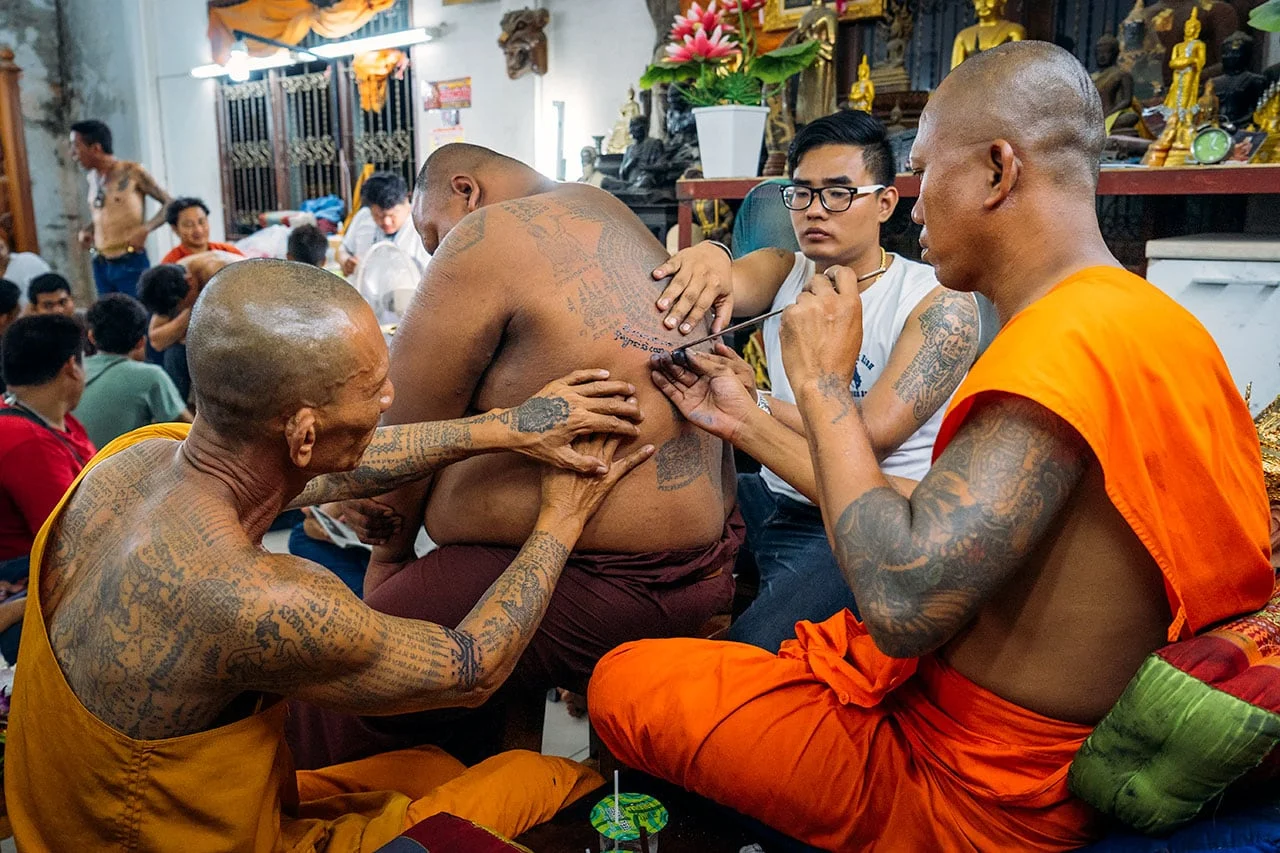
Receiving a sak yant in this traditional setting is unlike anything in a studio. There is no loud music or tourist cameras. The room often smells of incense and candle smoke. Ancient scripts handwritten by the master line the walls. Buddhist statues or images of old lineage masters watch over the ritual.
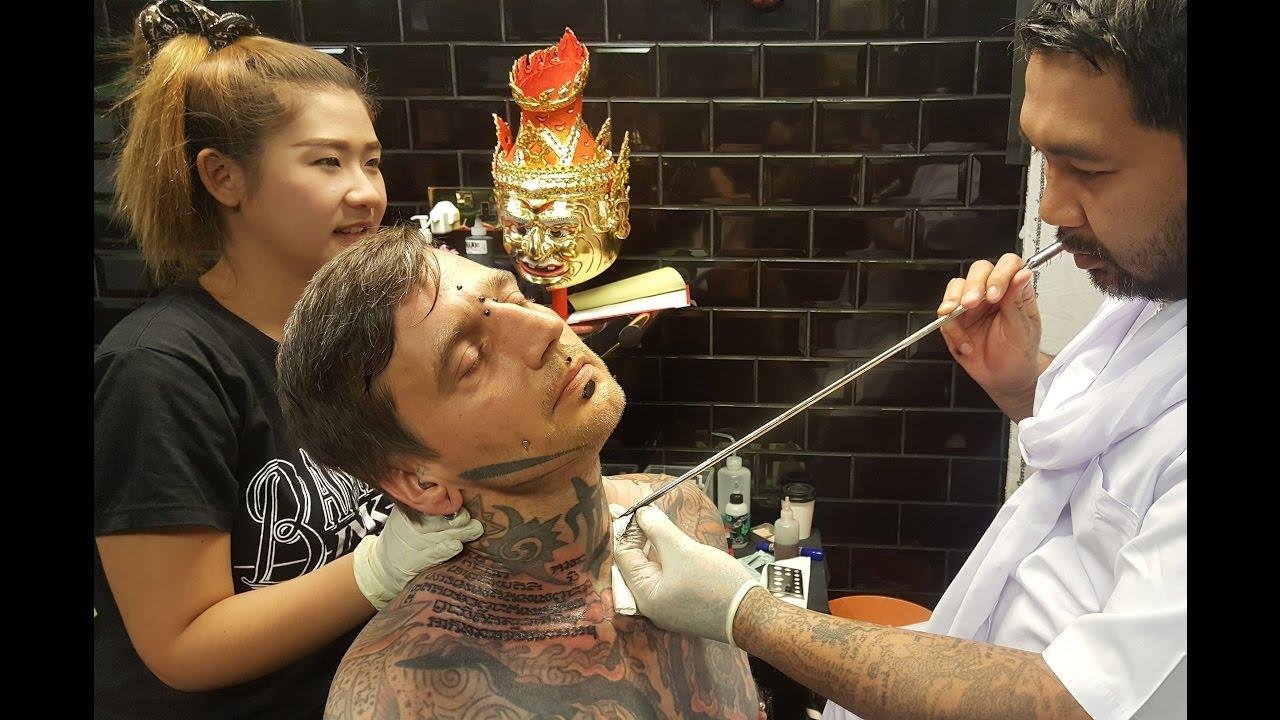
The ajarn grinds fresh ink, usually made from a mixture of charcoal, herbs and blessed oils. The needle is often a long metal rod sharpened by hand. Every step is accompanied by prayers, chants and breathing techniques. The master enters a deep meditative state. The rhythmic tapping is slow and purposeful. The student stays still, focusing on breath and intention.
For many, the most powerful moment comes at the end of the tattoo when the ajarn performs the incantation known as the activation blessing. This is believed to awaken the spiritual power within the design. Some students report feeling heat spreading through their body, a sudden emotional release, or a moment of inner clarity. Whether supernatural or psychological, the experience can be profoundly meaningful.
Rules, Discipline and the Spiritual Contract
Traditional sak yant comes with rules known as kwaam khit. These rules vary by master but often include avoiding harmful behavior, speaking truthfully, avoiding intoxication, or maintaining moral discipline. They are not punishments but commitments to improve one’s life. The tattoo becomes a reminder of the agreement between the student and themselves, guided by the master.
Breaking these rules is believed to weaken the power of the yant. Some ajarns will refuse to tattoo someone who repeatedly ignores these commitments. For the old masters, sak yant is a path of self discipline. It is not something to show off on social media. It is a spiritual anchor.
Why These Masters Remain Unknown to Tourists
Most tourists only encounter commercial or semi commercial sak yant. These services are accessible, clean, understandable and safe for beginners. But the world of non commercial sak yant is not built for tourism. The language, the rituals, the local networks and the spiritual expectations are difficult to translate.
Many old masters also avoid publicity because they fear disrespect toward the tradition. They do not want their sacred work turned into a trend, a fashion statement or a souvenir. They focus on people who genuinely seek guidance, not casual visitors.
This does not mean foreigners are unwelcome. Some foreigners have deep relationships with traditional ajarns. But they long earned trust, learned the culture and showed humility. The path is slow. The relationship is everything.

The Disappearing Lineage
As time passes, fewer masters remain. The old generation learned directly from monks and warriors who used sak yant for protection in dangerous times. Today the world has changed. Younger tattoo artists focus more on aesthetics and global styles. Many traditional rituals fade away as modern life becomes faster and more digital.
Yet the practice survives because it continues to offer something timeless. People still search for meaning, confidence, spiritual guidance and a sense of protection. Sak yant will never disappear as long as humans feel fear, hope and the desire to change their lives.
What These Masters Teach Us
The old tattoo masters remind us that spirituality does not require fame, money or spectacle. Their strength comes from silence, discipline and knowledge passed down through generations. They show that sacred art can survive without commercial success. Without advertising. Without contracts. Without ego.
Their world is quiet, but full of significance. Their tattoos are symbols of inner transformation, not outer decoration. And for those who have met these masters, the experience becomes one of the most unforgettable moments of their lives.
Final Thoughts
The non commercial sak yant world is one of the last surviving spiritual traditions of Thailand. It is raw, pure and largely hidden from the public eye. For those lucky enough to witness or experience it, the memory lingers forever. It reminds us that behind the modern image of Thailand lies a profound cultural heart that still beats strongly. A heart filled with stories, rituals and wisdom kept alive by humble masters who devote their lives to preserving something sacred.
ปรมาจารย์สักยันต์สายโบราณที่ไม่รับงานเชิงพาณิชย์
ศิลปะศักดิ์สิทธิ์ที่นักท่องเที่ยวแทบไม่เคยสัมผัส
ประเทศไทยเป็นที่รู้จักทั่วโลกในฐานะแหล่งกำเนิดศิลปะสักยันต์ที่งดงามและเต็มไปด้วยมนต์ขลัง ภาพของนักแสดงฮอลลีวูดหรือคนดังระดับโลกที่มารับยันต์จากพระหรืออาจารย์ดังถูกเผยแพร่ผ่านสื่อมากมาย สตูดิโอสักหลายแห่งในกรุงเทพฯ และเชียงใหม่ก็เปิดให้บริการในรูปแบบทันสมัย ปลอดภัย และเป็นมิตรต่อนักท่องเที่ยว แต่เบื้องหลังความนิยมอันกว้างขวางนี้ ยังคงมีโลกใบหนึ่งที่เงียบงัน ลึกซึ้ง และศักดิ์สิทธิ์ โลกที่นักท่องเที่ยวแทบไม่เคยเห็น นั่นคือโลกของปรมาจารย์สักยันต์สายโบราณที่ยังคงทำพิธีในรูปแบบไม่เชิงพาณิชย์
สำหรับปรมาจารย์เหล่านี้ การสักยันต์ไม่ใช่งานบริการ แต่เป็นพิธีกรรมอันศักดิ์สิทธิ์ที่ต้องประกอบไปด้วยศรัทธา ความตั้งใจ และความสัมพันธ์ระหว่างอาจารย์และศิษย์ สิ่งที่ผู้รับได้รับไม่ใช่เพียงลวดลายบนผิวหนัง แต่เป็นพลังแห่งการคุ้มครองและการเปลี่ยนแปลงภายใน
ความหมายของการสักยันต์แบบไม่เชิงพาณิชย์
อาจารย์โบราณเชื่อว่ายันต์เป็นของศักดิ์สิทธิ์ ไม่ใช่สินค้าที่ใครจะซื้อได้ด้วยเงิน ยิ่งไม่ใช่ศิลปะสำหรับอวด แต่เป็นสัญญาทางจิตวิญญาณ เงินทองไม่สามารถแลกพลังแห่งยันต์ได้ สิ่งที่อาจารย์รับมักเป็นของไหว้ตามธรรมเนียมไทย เช่น ผ้าเจ็ดสี ดอกไม้ ธูป เทียน หมากพลู หรือเหล้าขาวปริมาณเล็กน้อย สิ่งเหล่านี้ไม่ใช่ค่าตอบแทน แต่เป็นการแสดงความเคารพต่อครูบาอาจารย์และสายวิชา
ผู้ที่ต้องการรับยันต์จากอาจารย์เหล่านี้มักต้องมีความตั้งใจจริง อาจารย์บางท่านสอบถามประวัติชีวิต ปัญหา ความทุกข์ ความต้องการ หรือเหตุผลที่อยากรับยันต์ก่อนจะเริ่มพิธี หลายคนไม่ได้เลือกยันต์เอง แต่อาจารย์จะเป็นผู้เลือกให้ตามชะตาและจิตใจของศิษย์ เพราะเชื่อว่ายันต์จะเลือกคน ไม่ใช่คนเลือกยันต์
สถานที่ลับที่สายวิชาเก่าแก่ยังดำรงอยู่
ปรมาจารย์สักยันต์สายโบราณมักอยู่ในบ้านไม้หลังเล็ก วัดป่าที่เงียบสงบ หรือกุฏิพระในชนบทห่างไกล บางแห่งอยู่ในอีสาน บางแห่งอยู่ในภาคกลาง เช่น นครปฐม สุพรรณบุรี ชัยนาท หรือในภาคเหนืออย่างเชียงรายและลำพูน สถานที่เหล่านี้ไม่มีป้ายบอก ไม่มีการโฆษณา ไม่มีการรับงานรายวัน ทุกอย่างเกิดจากความไว้วางใจของคนในชุมชนและการแนะนำแบบปากต่อปาก
ปรมาจารย์หลายท่านเป็นผู้สูงอายุ บางคนอายุเกินเจ็ดสิบหรือแปดสิบปีแล้ว รอยสักแต่ละรอยที่ออกจากมือท่านเต็มไปด้วยประสบการณ์ หลักธรรม และคำสอนที่ถูกส่งต่อมาแต่โบราณ น่าเสียดายที่สายวิชาหลายสายกำลังค่อยๆ เลือนหายไปเมื่อปรมาจารย์รุ่นเก่าจากไปโดยไม่มีผู้สืบทอด
พิธีกรรมและบรรยากาศที่ยากจะลืม
การสักยันต์แบบดั้งเดิมให้ความรู้สึกต่างจากร้านสักทั่วไปอย่างสิ้นเชิง ห้องมักเต็มไปด้วยกลิ่นธูปเทียน มีผ้ายันต์และตัวอักษรขอมแขวนอยู่ตามฝาผนัง เครื่องบูชาครูวางอยู่ด้านหน้า รูปพระและรูปครูบาอาจารย์ประดับอย่างสง่างาม อาจารย์เตรียหมึกด้วยมือ โดยใช้ถ่านสมุนไพร น้ำมันศักดิ์สิทธิ์ และส่วนผสมตามสายวิชา เข็มเป็นเหล็กแท่งยาวที่ลับจนคมกริบ ทุกการลงเข็มจะมีบทสวดกำกับเพื่อเรียกพลังและความคุ้มครอง
เสียงเข็มที่กระทบผิวหนังเป็นจังหวะสม่ำเสมอ แต่เต็มไปด้วยความตั้งใจ ผู้รับต้องนั่งนิ่งและระลึกถึงสิ่งที่อยากปรับเปลี่ยนในชีวิต หลายคนบอกว่าในขณะสวดปลุกเสกช่วงสุดท้ายมีความรู้สึกแปลกประหลาดเกิดขึ้น บางคนรู้สึกร้อนวูบวาบ บางคนรู้สึกเหมือนถูกโอบกอดด้วยพลัง บางคนถึงกับร้องไห้โดยไม่รู้สาเหตุ
วินัย ข้อห้าม และสัญญาทางจิตใจ
สักยันต์แบบดั้งเดิมมักมีข้อปฏิบัติที่ต้องรักษา อาจารย์บางท่านกำหนดให้ผู้รับงดใช้ความรุนแรง งดพูดโกหก รักษาศีลพื้นฐาน หรือห้ามทำสิ่งที่เป็นการดูหมิ่นพลังศักดิ์สิทธิ์ ข้อปฏิบัติเหล่านี้ไม่ใช่บทลงโทษ แต่เป็นวิธีพัฒนาตนเอง หากผู้รับละเมิดอย่างต่อเนื่อง อาจารย์บางคนจะไม่ยอมลงยันต์ให้เพิ่มเติม เพราะถือว่าศิษย์ยังไม่พร้อมเดินในเส้นทางนี้
ความหมายของยันต์จึงไม่ใช่เพียงคาถาบนผิวหนัง แต่เป็นคำเตือนให้ผู้รับมีสติและดำเนินชีวิตด้วยความรับผิดชอบต่อตนเอง
ทำไมนักท่องเที่ยวแทบไม่เคยเห็นประเพณีนี้
นักท่องเที่ยวส่วนใหญ่รู้จักสักยันต์ผ่านบริการเชิงพาณิชย์ที่สะดวกและเป็นสากล จึงเข้าถึงง่าย มีคำแปล มีการจองคิวชัดเจน และไม่ต้องทำพิธีแบบโบราณ เส้นทางของปรมาจารย์สายโบราณนั้นต่างออกไปอย่างสิ้นเชิง เพราะไม่เปิดรับคนทั่วไป ไม่มีการประชาสัมพันธ์ และเน้นความสัมพันธ์เชิงศิษย์ครูมากกว่าเป็นธุรกิจ
ไม่ได้หมายความว่าคนต่างชาติจะรับยันต์ไม่ได้ แต่ต้องมีความตั้งใจจริง ต้องรู้จักวัฒนธรรม ต้องผ่านการแนะนำจากผู้ที่อาจารย์ไว้วางใจ และต้องเคารพในธรรมเนียมของสายวิชา ความสัมพันธ์ที่เกิดขึ้นจึงเป็นสิ่งสำคัญที่สุด
สายวิชาที่กำลังจะเลือนหาย
เมื่อกาลเวลาผ่านไป ปรมาจารย์รุ่นเก่าลดน้อยลง วิชาที่เคยใช้ในการคุ้มครองทหารโบราณ นักรบ และผู้เดินทางกำลังตกสู่ความเงียบงัน แม้ปัจจุบันมีช่างสักรุ่นใหม่เก่งๆ มากมาย แต่หลายคนเน้นความสวยงามมากกว่าพิธีกรรมและความหมายดั้งเดิม สายวิชาดั้งเดิมจึงอยู่ในช่วงเวลาสำคัญที่ต้องรักษาและสืบทอด
แม้เช่นนั้น ความต้องการด้านจิตวิญญาณของมนุษย์ยังคงเหมือนเดิม ผู้คนยังคงแสวงหาความคุ้มครอง ความมั่นใจ ความหวัง และการเปลี่ยนแปลงในชีวิต จึงทำให้สักยันต์แบบโบราณยังคงมีความหมายในยุคนี้
สิ่งที่ปรมาจารย์เหล่านี้สอนให้เราเข้าใจ
ปรมาจารย์สักยันต์สายโบราณแสดงให้เห็นว่าศิลปะศักดิ์สิทธิ์ไม่จำเป็นต้องอาศัยชื่อเสียง เงินทอง หรือความทันสมัย ความศักดิ์สิทธิ์เกิดจากความตั้งใจ ความเคารพ และความมุ่งมั่นในการรักษาวิชาที่รับสืบทอดมาจากครูบาอาจารย์หลายชั่วอายุคน
ยิ่งเรียนรู้ ยิ่งเข้าใจว่าการสักยันต์แบบดั้งเดิมเป็นเรื่องของการเปลี่ยนแปลงภายใน ไม่ใช่ภาพลักษณ์ภายนอก สำหรับผู้ที่ได้พบอาจารย์เหล่านี้ แม้เพียงครั้งเดียว ก็จะรู้สึกถึงพลังของสายวิชาเก่าแก่ที่ยังคงมีชีวิตอยู่ในมุมเล็กๆ ของสังคมไทย
บทสรุป
โลกของสักยันต์สายโบราณแบบไม่เชิงพาณิชย์คือความงดงามที่ซ่อนตัวอยู่ในสังคมไทย เป็นประเพณีที่ดำรงอยู่ด้วยศรัทธามากกว่าธุรกิจ เป็นศิลปะที่มาพร้อมพิธีกรรมที่เก่าแก่และซับซ้อน และเป็นมรดกทางจิตวิญญาณที่กำลังรอคนรุ่นใหม่ให้ความสนใจและช่วยสืบสานต่อไป
ศิลปะใดๆ อาจถูกลืมตามกาลเวลา แต่จิตวิญญาณที่ซ่อนอยู่ในศิลปะนั้นจะยังคงอยู่ตราบเท่าที่มีผู้เชื่อ ผู้เคารพ และผู้รักษาเจตนารมณ์ของครูบาอาจารย์เหล่านี้เอาไว้
#SakYant
#ThaiTattooCulture
#TraditionalSakYant
#AncientThaiTradition
#ThaiSpirituality
#SakYantMaster
#NonCommercialSakYant
#ThaiCulture
#SacredTattoo
#ThailandHeritage

หมวดหมู่
- Art
- Business & Work
- Cost of Living
- Crafts
- Culture & Traditions
- Digital Life
- Expat Life
- Farmer Life
- Festivals & Events
- Finance & Banking
- Food & Drink
- Health & Wellness
- Hidden Gems
- History & Heritage
- ภาษา
- Literature
- Nature & Adventure
- Networking
- Nightlife & Entertainment
- Real Estate
- Religion
- School & Education
- Shopping & Markets
- Social Life
- Sports
- Theater & Shows
- Transport
- Travel
- Visas & Immigration
- อื่นๆ
อ่านเพิ่มเติม
Thailand, renowned as the "Land of Smiles," is not only a haven for cultural richness and natural beauty but also a dynamic hub of industry. In this blog, we will explore the vibrant tapestry of Thailand's industrial landscape, delving into the sectors that contribute to the nation's economic dynamism and global significance. Manufacturing Powerhouse: Thailand stands as a manufacturing...

Khao Kho - If you’re looking for a place that combines the cool mountain breeze, panoramic views, misty mornings, and rich historical significance, Khao Kho might just be your next favorite escape. Nestled in Phetchabun Province, about 5–6 hours from Bangkok, Khao Kho is one of Thailand’s best-kept secrets. 📍 What is Khao Kho? Khao Kho is both a mountain and a district located...
Kanchanaburi - Nestled about 120 km west of Bangkok, Kanchanaburi is a province that quietly surprises. Here, jungle-covered hills meet tragic wartime history, and sleepy river towns echo with stories of resilience. Whether you're drawn to the past, lush nature, or a serene getaway, Kanchanaburi offers something real — less polished than Thailand’s southern beaches but far...
Ayutthaya - Stepping into the ancient city of Ayutthaya is like embarking on a voyage through the rich history and grandeur of the Thai Kingdom. Situated just north of Bangkok, Ayutthaya served as the capital of Thailand for over four centuries, from the 14th to the 18th century. In this blog, we'll explore the captivating allure of Ayutthaya, a UNESCO World Heritage Site that stands as a...
Chiang Mai isn't just a haven for temple enthusiasts and nature lovers—it's also a paradise for coffee connoisseurs. The city's burgeoning coffee culture has become a hallmark of its charm, offering a delightful blend of rich flavors, cozy cafes, and a laid-back atmosphere. Join us on a journey through Chiang Mai's thriving coffee scene, where each cup tells a story and every sip is an...