
Thai Apologies That Aren’t Really Apologies (🇺🇸/🇹🇭)
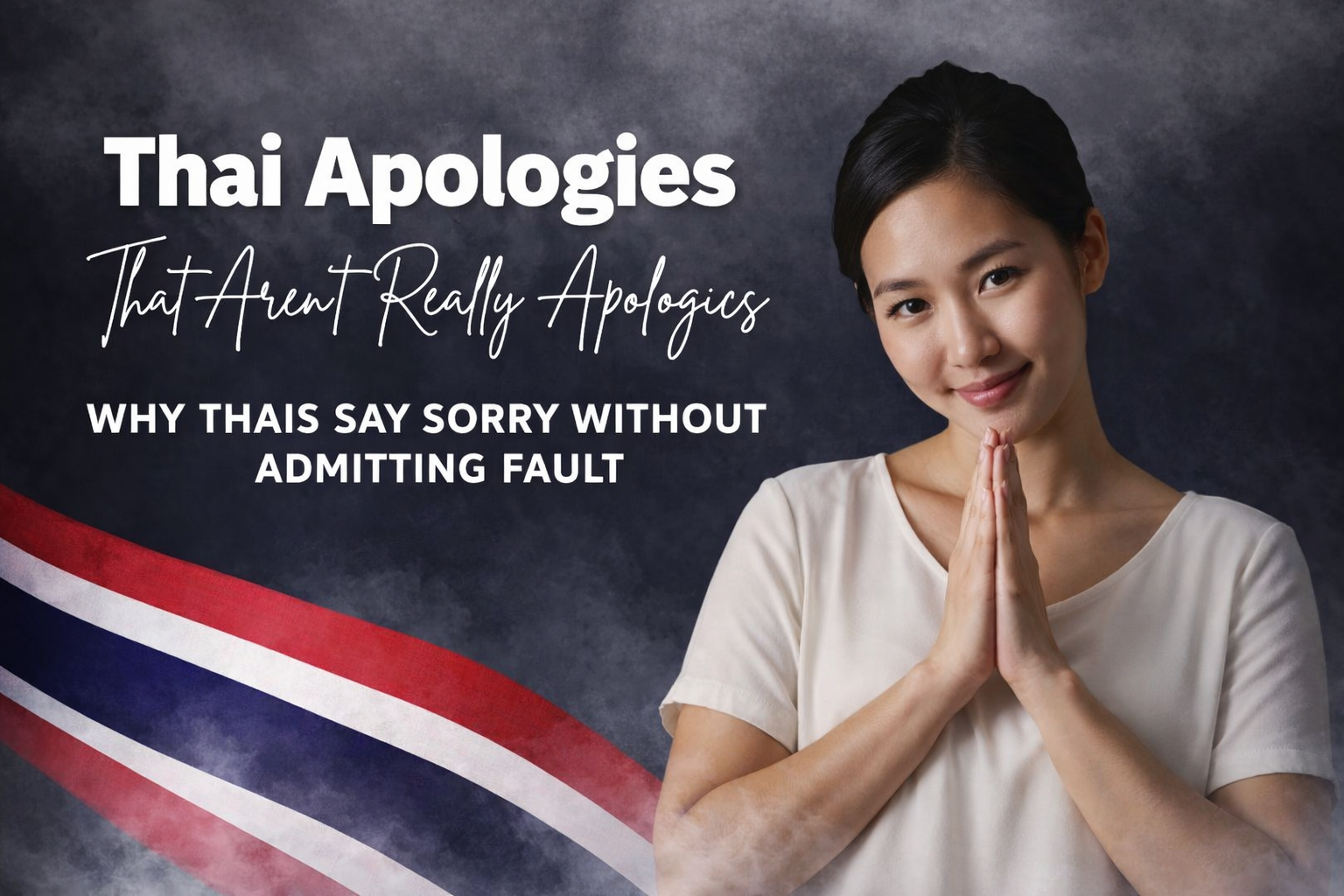
WHY THAIS SAY SORRY WITHOUT ADMITTING FAULT
For many foreigners living in Thailand or spending extended time here, the first real cultural shock does not come from spicy food, traffic, bureaucracy, or even visas. It comes from something far more subtle and emotionally disorienting: apologies that sound sincere but feel empty, polite but unresolved, warm but strangely disconnected from responsibility. This is one of the most misunderstood aspects of Thai culture, and it is also one of the most revealing windows into how Thai society actually works.
To a Western mind, an apology is almost always tied to fault. Saying sorry usually means acknowledging that something went wrong, accepting responsibility for it, and implicitly promising that it will not happen again. The apology is a moral act. It restores balance by naming the problem directly. In Thailand, the word sorry often serves a completely different purpose. It is not about fault. It is about harmony.

When a Thai person says khor thot or sorry, they are often not admitting that they did something wrong in the way a foreigner expects. Instead, they are acknowledging that discomfort exists in the situation. The apology is aimed at the emotional atmosphere, not at the facts. The goal is not truth or accountability, but the reduction of tension. This is why foreigners so often walk away from these interactions feeling unsettled, confused, or even gaslit, despite the conversation sounding polite on the surface.
A common scenario illustrates this perfectly. A foreigner orders food. The wrong dish arrives. The server smiles and says sorry. The foreigner explains politely that this is not what they ordered. The server smiles again and says sorry. The dish is taken away, sometimes replaced, sometimes not, sometimes replaced with something else entirely. At no point does the server say they made a mistake. From a Thai perspective, that would be unnecessary and potentially disruptive. The problem is not the error. The problem is the friction it caused.

This difference becomes far more serious in relationships, business, and conflict. When a Thai partner says sorry after hurting someone emotionally, a foreigner often expects an explanation, an acknowledgment of what exactly went wrong, and reassurance that the behavior will change. Instead, they may receive a gentle apology, silence, or a change of subject. To the Thai partner, this is a sincere attempt to restore peace. To the foreigner, it feels like avoidance.
The root of this difference lies deep in Thai social structure. Thai society is built around the avoidance of open conflict and the preservation of face. Face is not just personal pride. It is social stability. Publicly admitting fault can lower one’s status, embarrass others, or create a power imbalance that ripples outward. An apology that clearly assigns blame risks reopening the issue, prolonging discomfort, and forcing others to react. That is why it is often avoided.
In Thai culture, responsibility is often handled through action rather than words. A problem might quietly be fixed without ever being verbally acknowledged. A person might adjust their behavior without explicitly admitting they were wrong. From a Thai perspective, this is mature and considerate. The issue has been resolved without drama. From a Western perspective, it feels dishonest, because the words never matched the reality.

This clash becomes especially intense for foreigners who value emotional transparency. They feel unseen, unheard, and invalidated. They may start repeating themselves, asking for clarification, or pushing for explicit acknowledgment. Ironically, this often makes the situation worse. The more a foreigner pushes for a direct apology that admits fault, the more pressure and discomfort is created, and the more the Thai person retreats into silence or vague politeness.
Another layer of confusion comes from the Thai habit of apologizing even when no one is at fault. A Thai person might say sorry simply because someone else is upset, even if they did nothing wrong. They might say sorry because a plan did not work out, because the weather changed, or because someone misunderstood them. The apology in these cases is an expression of empathy, not guilt. It is closer to saying I regret that you feel uncomfortable than I caused this problem.
Foreigners often misinterpret this as manipulation or insincerity. They think the Thai person is apologizing too easily, without meaning it, or using the word sorry as a shield to avoid responsibility. In reality, the Thai person may genuinely believe they are being kind and respectful. They are responding to the emotional tone of the situation, not the logic of cause and effect.
The confusion deepens because Thai apologies are rarely followed by explanations. Explaining oneself can sound defensive or argumentative in Thai culture. Silence is often seen as respectful restraint. Unfortunately, silence is exactly what many foreigners interpret as indifference or guilt. Two people can walk away from the same conversation with completely opposite interpretations of what just happened.
Power dynamics also play a crucial role. In Thailand, people lower in hierarchy are expected to apologize upward regardless of fault. A junior employee may apologize to a senior even if the senior made the mistake. A younger person may apologize to an elder simply to maintain respect. For foreigners raised in more egalitarian cultures, this feels deeply unfair. For Thais, it is simply how social order is maintained.

Understanding this does not mean foreigners must accept behavior that hurts them. But it does mean that demanding Western-style apologies in Thailand is often ineffective. It creates pressure without clarity. A more effective approach is to focus on outcomes rather than admissions. Asking what can be done differently next time is often more productive than asking who was wrong. Observing behavior over time is more reliable than listening for the perfect apology.
The hardest truth for many foreigners to accept is that in Thailand, emotional repair does not always come through words. It comes through restored normality. If a Thai person resumes warmth, shows care, adjusts behavior, or continues the relationship without tension, that may be their version of a sincere apology. No speech, no confession, no dramatic acknowledgment. Just quiet correction.

This does not mean that Thai culture lacks accountability. It means accountability operates through different channels. It is indirect, contextual, and deeply tied to social harmony. For foreigners who expect clarity through language, this can feel exhausting. But for those who learn to read actions, tone, and long-term patterns instead of individual conversations, a different kind of understanding begins to emerge.
Thai apologies are not fake. They are simply not designed to do what Western apologies are designed to do. They are tools for smoothing the surface, not dissecting the cause. Once a foreigner understands this, many interactions that once felt frustrating suddenly make sense. And with that understanding comes the ability to navigate Thailand not with constant confusion, but with cultural fluency and emotional realism.
แน่นอน นี่คือ เวอร์ชันภาษาไทยแบบยาว ละเอียด และลึก โดยรักษาน้ำเสียงจริงจัง เป็นธรรมชาติ และอธิบายให้คนไทยเองก็อ่านแล้วเข้าใจมุมมองของชาวต่างชาติได้ด้วย
สำหรับชาวต่างชาติที่ใช้ชีวิตอยู่ในประเทศไทย หรือมีความสัมพันธ์ใกล้ชิดกับคนไทย หนึ่งในความสับสนที่สร้างความอึดอัดใจมากที่สุด ไม่ใช่เรื่องภาษา อาหาร การจราจร หรือระบบราชการ แต่คือ “คำขอโทษ” ของคนไทย คำขอโทษที่ฟังดูสุภาพ อ่อนโยน และจริงใจ แต่กลับไม่ให้ความรู้สึกว่ามีใครยอมรับความผิด หรือเข้าใจต้นตอของปัญหาอย่างแท้จริง
ในวัฒนธรรมตะวันตก การขอโทษมักเชื่อมโยงกับความรับผิดชอบโดยตรง การพูดว่าขอโทษหมายถึงการยอมรับว่าตนทำผิด เข้าใจว่าทำให้ผู้อื่นเดือดร้อน และพร้อมจะไม่ทำให้เกิดขึ้นอีก คำขอโทษจึงเป็นการซ่อมแซมความสัมพันธ์ผ่านความจริงและความชัดเจน
แต่ในสังคมไทย คำว่า “ขอโทษ” หรือ “sorry” มักไม่ได้ทำหน้าที่แบบนั้น คำขอโทษของคนไทยไม่ได้มุ่งไปที่ความผิด แต่มุ่งไปที่ “บรรยากาศ” ของสถานการณ์ เป้าหมายไม่ใช่การระบุว่าใครผิด แต่คือการลดความตึงเครียด ทำให้สถานการณ์กลับมาเรียบและสงบอีกครั้ง
นี่คือจุดที่ทำให้ชาวต่างชาติสับสนอย่างลึกซึ้ง เพราะพวกเขาได้ยินคำขอโทษ แต่ไม่รู้สึกว่าปัญหาได้รับการยอมรับหรือแก้ไขในระดับจิตใจ
ตัวอย่างที่พบได้บ่อยมากคือเรื่องเล็ก ๆ อย่างการสั่งอาหาร อาหารมาไม่ตรงกับที่สั่ง พนักงานยิ้มและพูดว่าขอโทษ ชาวต่างชาติอธิบายอย่างสุภาพว่าไม่ใช่เมนูที่สั่ง พนักงานก็ยังยิ้มและพูดว่าขอโทษอีกครั้ง อาหารอาจถูกเปลี่ยนหรือไม่เปลี่ยนก็ได้ แต่แทบจะไม่มีคำพูดว่า “ฉันทำผิด” สำหรับคนไทย การพูดแบบนั้นไม่จำเป็น และอาจทำให้สถานการณ์อึดอัดโดยไม่จำเป็น ปัญหาไม่ใช่ความผิดพลาด แต่คือความไม่สบายใจที่เกิดขึ้น
เมื่อรูปแบบนี้เกิดขึ้นในความสัมพันธ์ส่วนตัวหรือการทำงาน ผลกระทบจะลึกกว่านั้นมาก ชาวต่างชาติที่ถูกทำร้ายความรู้สึกมักคาดหวังคำอธิบาย การยอมรับว่าอะไรผิด และการรับรองว่าจะไม่เกิดขึ้นอีก แต่สิ่งที่ได้รับกลับมาอาจเป็นเพียงคำขอโทษเบา ๆ ความเงียบ หรือการเปลี่ยนเรื่อง สำหรับคนไทย นี่คือความพยายามจริงใจในการรักษาความสงบ แต่สำหรับชาวต่างชาติ มันให้ความรู้สึกเหมือนการหลีกเลี่ยง หรือไม่รับผิดชอบ
รากของความแตกต่างนี้ฝังลึกอยู่ในโครงสร้างทางสังคมของไทย สังคมไทยให้ความสำคัญกับการหลีกเลี่ยงความขัดแย้งและการรักษาหน้า “หน้า” ไม่ได้หมายถึงศักดิ์ศรีส่วนตัวเท่านั้น แต่หมายถึงความสมดุลของความสัมพันธ์ทั้งหมด การยอมรับความผิดอย่างชัดเจนในที่เปิดเผยอาจทำให้ใครบางคนเสียหน้า ทำให้ผู้อื่นอึดอัด หรือทำให้ความสัมพันธ์เสียสมดุล
ในวัฒนธรรมไทย ความรับผิดชอบมักแสดงออกผ่านการกระทำมากกว่าคำพูด ปัญหาอาจถูกแก้ไขเงียบ ๆ โดยไม่เคยถูกพูดถึงตรง ๆ พฤติกรรมอาจเปลี่ยนโดยไม่เคยมีการยอมรับว่าครั้งก่อนผิด สำหรับคนไทย นี่คือความเป็นผู้ใหญ่และมีมารยาท แต่สำหรับชาวต่างชาติ มันดูเหมือนการไม่ซื่อสัตย์ เพราะคำพูดไม่ตรงกับสิ่งที่เกิดขึ้น
สิ่งที่ทำให้สับสนยิ่งขึ้นคือ คนไทยมักขอโทษแม้ในกรณีที่ตนไม่ได้ทำผิดเลย การขอโทษอาจเป็นเพียงการแสดงความเห็นใจ เช่น ขอโทษที่คุณรู้สึกไม่ดี ขอโทษที่สถานการณ์ไม่เป็นไปตามที่หวัง คำขอโทษในที่นี้ไม่ใช่การยอมรับความผิด แต่เป็นการยอมรับความรู้สึกของอีกฝ่าย
ชาวต่างชาติจำนวนมากตีความสิ่งนี้ผิด พวกเขารู้สึกว่าคำขอโทษถูกใช้พร่ำเพรื่อ ไม่มีน้ำหนัก หรือเป็นเกราะป้องกันเพื่อหลีกเลี่ยงความรับผิดชอบ ทั้งที่ในมุมมองของคนไทย นี่คือความสุภาพและความใส่ใจต่อความรู้สึกของผู้อื่น
อีกประเด็นหนึ่งที่สำคัญมากคือเรื่องลำดับชั้น ในสังคมไทย คนที่อยู่ในลำดับชั้นต่ำกว่ามักต้องเป็นฝ่ายขอโทษก่อนเสมอ ไม่ว่าจะเป็นฝ่ายผิดหรือไม่ก็ตาม ลูกน้องขอโทษหัวหน้า เด็กรุ่นหลังขอโทษผู้ใหญ่ สิ่งนี้สำหรับชาวต่างชาติอาจดูไม่ยุติธรรม แต่สำหรับคนไทย นี่คือวิธีรักษาความเป็นระเบียบของสังคม
ปัญหาใหญ่เกิดขึ้นเมื่อชาวต่างชาติพยายามผลักดันให้ได้คำขอโทษแบบตรงไปตรงมา ยิ่งกดดัน ยิ่งถาม ยิ่งต้องการคำอธิบาย สถานการณ์ยิ่งตึงเครียด และคนไทยยิ่งถอยห่าง ความเงียบที่เกิดขึ้นไม่ได้หมายถึงไม่แคร์ แต่หมายถึงการหลีกเลี่ยงการทำให้สถานการณ์แย่ลง
ความจริงที่ยากที่สุดสำหรับชาวต่างชาติคือ ในวัฒนธรรมไทย การเยียวยาความรู้สึกไม่ได้เกิดจากคำพูดเสมอไป แต่มาจากการกลับสู่ความเป็นปกติ หากอีกฝ่ายยังดูแล เอาใจใส่ ปรับพฤติกรรม และรักษาความสัมพันธ์ไว้ นั่นอาจเป็นคำขอโทษที่จริงใจที่สุดในแบบของไทย แม้จะไม่มีการพูดถึงความผิดอย่างชัดเจนเลยก็ตาม
คำขอโทษของคนไทยไม่ใช่ของปลอม แต่มันถูกออกแบบมาเพื่อเป้าหมายที่ต่างออกไป ไม่ได้มีไว้เพื่อวิเคราะห์ต้นตอของปัญหา แต่มีไว้เพื่อทำให้ผิวหน้าของความสัมพันธ์กลับมาเรียบอีกครั้ง เมื่อชาวต่างชาติเริ่มเข้าใจสิ่งนี้ ความสับสน ความหงุดหงิด และความรู้สึกเหมือนถูกเมินเฉย จะค่อย ๆ เปลี่ยนเป็นความเข้าใจ และการปรับตัวที่ลึกซึ้งยิ่งขึ้น
และนั่นคือจุดที่การอยู่ร่วมกันระหว่างวัฒนธรรม เริ่มไม่ใช่เรื่องของใครถูกใครผิด แต่เป็นเรื่องของการเข้าใจว่าคนแต่ละสังคมซ่อมแซมความสัมพันธ์ด้วยวิธีที่ต่างกันอย่างไร
#ThailandCulture
#ThaiSociety
#ThaiApologies
#LivingInThailand
#ExpatLifeThailand
#ThaiMindset
#CulturalDifferences
#UnderstandThailand
#ThaiWay
#ThaiEtiquette
#CrossCultural
#ThailandInsights
#LifeInThailand
#ThaiCommunication
#วัฒนธรรมไทย
#สังคมไทย
#การสื่อสารแบบไทย
#เข้าใจคนไทย
#มุมมองต่างวัฒนธรรม
#ชีวิตในประเทศไทย

Categories
- Art
- Business & Work
- Cost of Living
- Crafts
- Culture & Traditions
- Digital Life
- Expat Life
- Farmer Life
- Festivals & Events
- Finance & Banking
- Food & Drink
- Health & Wellness
- Hidden Gems
- History & Heritage
- Language
- Literature
- Nature & Adventure
- Networking
- Nightlife & Entertainment
- Real Estate
- Religion
- School & Education
- Shopping & Markets
- Social Life
- Sports
- Theater & Shows
- Transport
- Travel
- Visas & Immigration
- Other
Read More
Pattaya, nestled along the Gulf of Thailand, Pattaya beckons travelers with its vibrant blend of coastal charm, electrifying nightlife, and a myriad of recreational activities. Once a quiet fishing village, Pattaya has evolved into a bustling destination that caters to a diverse range of visitors. In this blog post, we'll explore the allure of Pattaya and uncover the reasons why this coastal...

Phi Phi Island: Nestled in the azure waters of the Andaman Sea, the Phi Phi Islands stand as an epitome of tropical perfection. Renowned for their breathtaking landscapes, crystal-clear waters, and vibrant marine life, these islands have become a must-visit destination for travelers seeking an idyllic escape. In this blog post, we will embark on a virtual journey to explore the enchanting...

When you think of Thailand's economic hubs, bustling Bangkok or the industrial might of Rayong might come to mind. But tucked away just southwest of the capital lies a province that plays an absolutely critical, though often unsung, role in the Thai economy: Samut Sakhon. This vibrant coastal province, affectionately known as "Little Fisherman's Town" or "Mahachai" by locals, is a powerhouse of...

IsaanNestled in the heart of Thailand, the Isaan region stands as a hidden gem waiting to be discovered. Often overlooked by mainstream tourism, Isaan is a captivating region that offers a unique blend of cultural richness, historical significance, and natural beauty. In this blog post, we will delve into the wonders of Isaan, unveiling the reasons why this northeastern part of Thailand...

Chiang Mai, with its lush greenery, majestic mountains, and rich cultural heritage, is not only a haven for temple enthusiasts but also an adventure seeker's paradise. If you're looking to add an adrenaline rush to your travel itinerary, Chiang Mai's zipline trips offer a thrilling and unique way to experience the beauty of Northern Thailand. The Thrill of Flight: Embark on an exhilarating...